Skip to content
gutsphere.

Guided practice

Straining when you try to go?
Sit so it can be easier.

At your pace · 4 steps · Written cues · Read the steps

Support your feet and lean forward gently, as described in NHS toilet-position advice.

  • At your pace
  • A check-in after
  • Free · no account

An educational follow-along, not treatment. Nothing you do here is saved.

A more comfortable toilet position
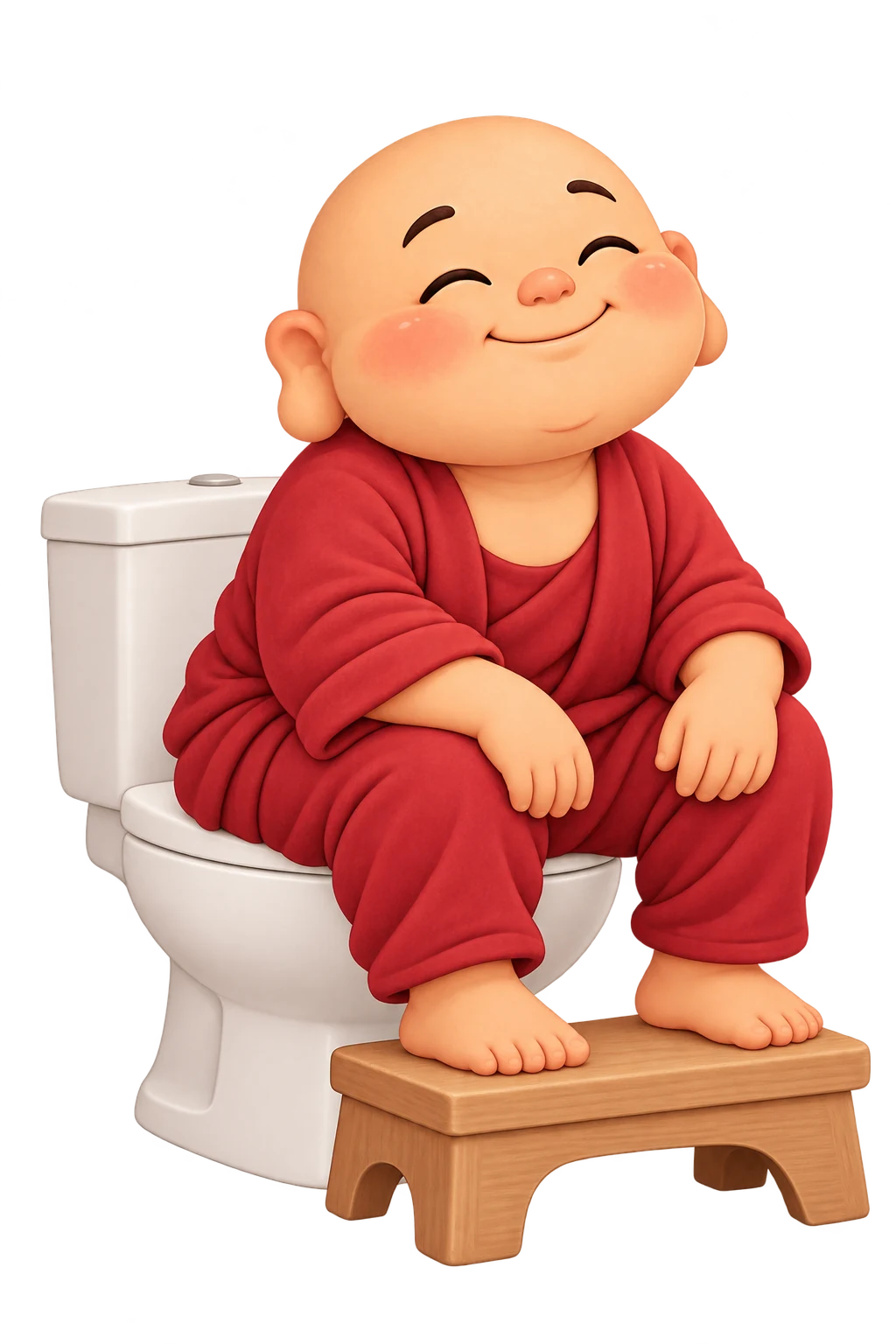
Gutsphere’s monk character on the toilet with feet on a low stool, leaning a little forward.

Stop for pain or feeling unwell. Do not keep pushing if nothing passes.

A more comfortable toilet position

At your pace · 4 steps

About
  1. Sit fully. Let the seat support your weight.
  2. Support your feet. Use a secure low support if comfortable. Knees can sit a little above hips.
  3. Lean a little forward. Rest your forearms on your thighs. Keep your back comfortable.
  4. Let your breath flow. No breath-holding or forceful push. If nothing happens, finish the attempt.

The guided player needs JavaScript. You can follow these steps at your own pace.

Follow the written cues at your own pace.

Where this practice fits

Does this sound familiar?

Start with what brought you here.

Why it mattersStraining when you try to go?Read the answer

NHS guidance suggests supported feet and raised knees to make passing stool easier. Start with a position you can hold comfortably. Relief is not guaranteed.

Who it’s forFor a comfortable toilet attemptRead the answer

Try the setup when you have an urge; skip positions that cause pain or feel unstable. Use it alongside your treatment if you have a diagnosed condition. Follow any movement restrictions from your clinician. If you have had hip or pelvic surgery or are pregnant, check with your care team first.

When to use itUse the urge you haveRead the answer

Use the toilet when the urge arrives, as NIDDK advises. You do not need to wait for a planned session. Avoid repeated attempts without an urge.

Where to do itUse a stable toilet seatRead the answer

Choose a toilet where you can sit fully with both feet supported. A secure foot support may help. Skip it if getting into position feels unsafe.

The idea is simple

Start with how you sit.

Support your feet and lean forward gently, as described in NHS toilet-position advice. Keep your weight on the seat. This guide covers posture, not muscle retraining.

  1. Sit fully Let the seat support your weight.
  2. Support your feet Use a secure low support if comfortable. Knees can sit a little above hips.
  3. Lean a little forward Rest your forearms on your thighs. Keep your back comfortable.
  4. Let your breath flow No breath-holding or forceful push. If nothing happens, finish the attempt.

Read the sources

Notice what changes

Less guesswork. Something to look back on.

After an attempt, two quick questions: how did it feel, and did anything pass? Either answer is fine; nothing this time is common.

You can bring what you notice to a conversation with your clinician.

How a check-in looks. After a practice on this page, the phones show your own answers; nothing is saved.

1 · The check-in
2 · What it shows after

Your questions, answered

Know what you’re trying.

Read in order, or go straight to the question on your mind. Share an answer when someone else needs it.

Questions 1–3 of 10

Why it mattersQuestion 01

Can toilet position help with constipation?

NHS guidance suggests supported feet and raised knees to make passing stool easier.

Start with a position you can hold comfortably. Relief is not guaranteed.

What it isQuestion 02

What is a supported toilet position?

Support your feet and lean forward gently, as described in NHS toilet-position advice.

Keep your weight on the seat. This guide covers posture, not muscle retraining.

Who it’s forQuestion 03

Who can try a supported toilet position?

Try the setup when you have an urge; skip positions that cause pain or feel unstable.

Use it alongside your treatment if you have a diagnosed condition. Follow any movement restrictions from your clinician. If you have had hip or pelvic surgery or are pregnant, check with your care team first.

When to use itQuestion 04

When should I try the toilet position?

Use the toilet when the urge arrives, as NIDDK advises.

You do not need to wait for a planned session. Avoid repeated attempts without an urge.

Where to do itQuestion 05

Where should I try this toilet position?

Choose a toilet where you can sit fully with both feet supported.

A secure foot support may help. Skip it if getting into position feels unsafe.

How to do itQuestion 06

How do I sit on the toilet without straining?

Follow the posture cues one at a time without holding your breath.

  1. Sit fully on the toilet seat.
  2. Support both feet securely.
  3. Lean forward a little.
  4. Let your breath flow gently.

Use only a comfortable position. Stop rather than force stool out.

Common mistakesQuestion 07

What mistakes should I avoid on the toilet?

Avoid hovering, breath-holding, and forcing a position that hurts.

Sit down fully instead of hovering. If nothing happens, leave the attempt and return with an urge.

Does it work?Question 08

Does this guided toilet position relieve constipation?

Not well studied for constipation as this exact brief guide; NHS posture advice does not establish its success rate.

No trial of this player was identified in this review. It is a practical cue, not a proven immediate treatment.

See a professional ifQuestion 09

When should I ask about pelvic floor help?

Tell your clinician if soft stool repeatedly needs straining or feels difficult to pass.

Ask whether a pelvic floor assessment fits your symptoms. A brief posture guide cannot establish the cause.

See a doctor ifQuestion 10

When should I see a doctor about constipation?

Get medical help right away for constipation with bleeding from your rectum or blood in your stool, constant belly pain, vomiting, being unable to pass gas, fever, lower back pain or weight loss you can’t explain.

Speak with a clinician if constipation continues despite self-care or a close relative has had colon or rectal cancer. If pain is severe, symptoms are rapidly worsening, or you feel seriously unwell, seek urgent care. Arrange a medical review for a sudden bowel-habit change or constipation that keeps returning despite self-care.

Evidence and review

Helpful advice has limits.

Not well studied for constipation as this exact brief guide; NHS posture advice does not establish its success rate.

Exact app guide untested. General posture advice is supported by patient education, not graded here as a clinical guideline.

Prepared by Gutsphere · Sources checked 2026-10-12

Make it yours

The same practice. Made yours in the app.

You can do this practice here for free. In the app it sits on Today with the rest of your plan.

  • A toilet-position step on Today
  • Every check-in saved, so you can see change
  • A summary to share with your clinician

Download the app

Useful reading

Browse all articles

When you want another step

Where would you like to go from here?